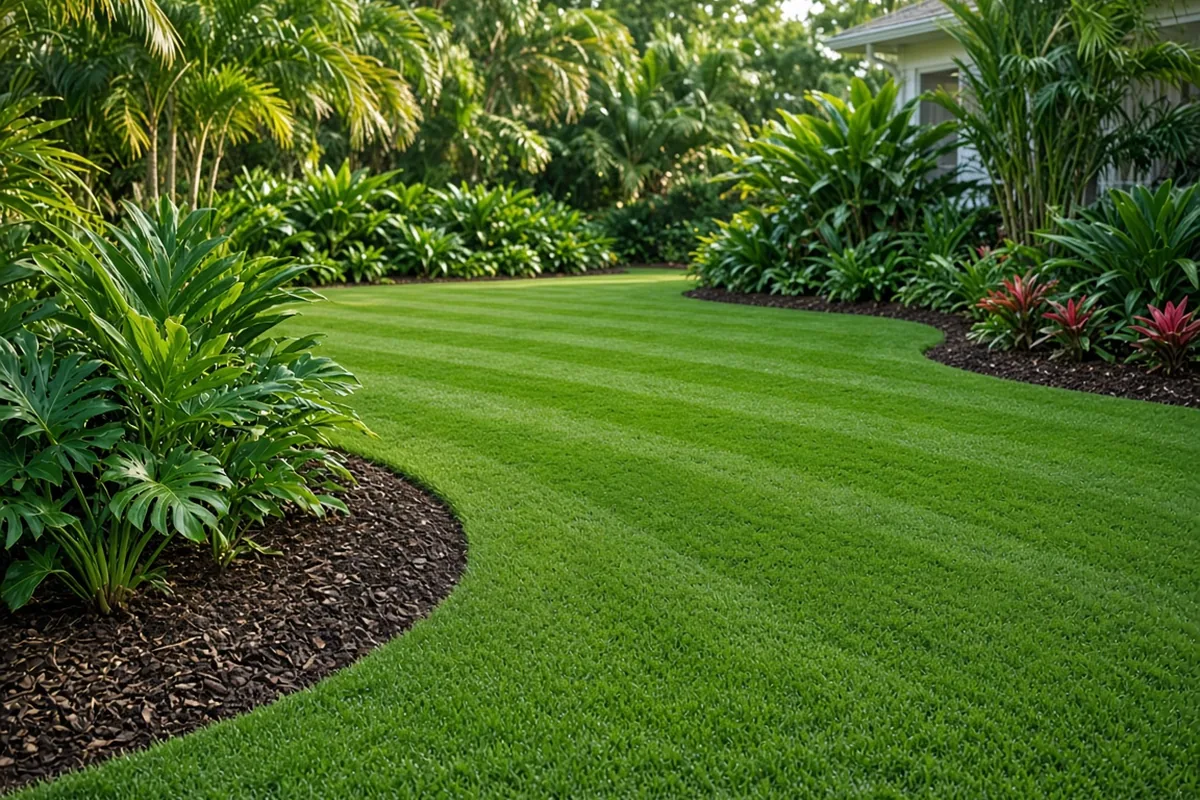
South Florida lawn care is less about a one-day makeover and more about a repeatable cut, edge, and bed standard. Heat, humidity, and a long growing season keep turf and hedges active for months. For homeowners comparing crews, the useful starting point is not a brochure photo, but a clear maintenance plan: mowing height, edging lines, hedge shaping, and how garden beds are kept after each visit.
Earthly Exteriors, based in Southwest Ranches, lists professional mowing and edging, weed trimming, hedge shaping, garden-bed care, and property cleanup among its lawn care services, alongside landscaping, pavers, and tree work. That mix matters because a lawn rarely fails in isolation. Bed edges, overhanging palms, and compacted walkways all change how turf looks between visits.
Service details are outlined on the Earthly Exteriors services brochure, with the broader company overview on the Earthly Exteriors homepage.
South Florida yards deal with rapid growth after rain and stress during dry stretches. A polished lawn has one primary outdoor job: stay dense and evenly cut without scalp marks, ragged edges, or beds that spill into the turf. Routine care is the tool that keeps that job stable.
Mowing Height Starts the Density Conversation
University of Florida IFAS guidance for St. Augustinegrass, the turf type common on many South Florida properties, recommends mowing standard cultivars at about 3.5 to 4 inches, with dwarf cultivars lower, around 2 to 2.5 inches. Removing more than one-third of the leaf blade in a single cut stresses the plant and can open the stand to weeds and drought injury.
Higher cuts within the recommended range generally support deeper roots and better shade and heat tolerance. Scalping to chase a short, golf-course look often backfires in South Florida heat. Clippings left on the lawn, when they are light and evenly spread, return nutrients rather than creating a problem layer.
Homeowners sometimes treat every grass species as interchangeable. Blade width, growth habit, and recovery speed are not interchangeable. Choosing a mowing height still requires knowing which turf is on the property and how fast it grows between visits. A schedule that worked in a cooler climate will usually under-cut or over-wait here.
Edging and Bed Lines Decide Whether the Yard Looks Finished
A clean mow without a crisp edge still looks unfinished along driveways, walkways, and garden beds. Weed trimming along fences, utility boxes, and hardscape joints completes the same visit. Seasonal cleanup removes debris that otherwise mats turf or blocks irrigation heads.
Bed lines that wander after storms or foot traffic should be reset before mulch or new planting is judged. Soft, eroded edges make even healthy turf look neglected. Consistent edging is often what neighbors notice first, long before they notice cultivar choice.
Corner lots and driveway aprons need special attention. Grass that creeps over pavers or curb lines creates a maintenance debt that grows each week. Keeping hardscape edges clear also protects paver joints and drainage paths that a later driveway refresh will depend on.
Match Lawn Care to the Property Question
A useful comparison asks what the property must look like between visits and what it can tolerate after rain. If the objective is a consistent cut with shaped hedges and tidy beds, scheduled lawn care through a local crew is a direct match. If the objective is a full landscape redesign, planting and hardscape work belong on a separate timeline, with maintenance folded in after install.
Many South Florida properties combine both: regular lawn care for the finished look, plus periodic landscaping refreshes when beds thin or mulch settles. The brochure also lists tropical and native plant selection, fresh mulch, decorative stone, and landscape renovations, which lets maintenance sit inside a wider outdoor plan rather than as an afterthought.
Asking for mowing alone without edging, hedge shaping, or bed cleanup often produces a weaker result than a scoped visit. The cut is one component. The edges and beds are the others. Homeowners who price only mowing minutes usually rediscover that gap the first time the yard is viewed from the street.
Hedge Shaping and Garden Beds Belong on the Same Route
Earthly Exteriors includes hedge shaping and garden-bed care in its lawn care menu. That pairing is practical. Hedges that grow into walkways or block window light create the same unfinished look as tall turf, and beds that fill with weeds undo a clean mow within days.
- Confirm turf type and preferred mowing height before setting a schedule.
- Note irrigation heads, pet paths, and low spots that hold water after storms.
- Decide which hedges need regular shaping versus seasonal cuts only.
- Coordinate tree trimming when palms or shade trees drop litter onto the lawn.
UF/IFAS also stresses sharp blades and dry-turf mowing when practical, because torn leaf tips and clogged decks leave a poorer finish. Changing mowing direction over time helps reduce wear patterns and grain. Those details sound small until a lawn is photographed after a rainy week of delayed cuts.
Establishment after sod work is a different phase. New turf needs careful watering and delayed heavy traffic until roots hold. Once established, irrigation should shift toward as-needed watering guided by wilting cues and local restrictions, not a fixed daily soak. Afternoon thunderstorms do not automatically replace a missed irrigation window during a dry stretch.
Tree Work and Hardscape Timing Affect Lawn Quality
Palm and tree trimming, plant removal, and stump grinding appear on the same brochure as lawn care. Heavy shade, leaf drop, and root competition all change how turf performs under canopy. Scheduling canopy work before blaming the mowing height often saves a season of frustration.
Paver edges and walkway work also belong in the conversation. Installing or repairing hardscape after a lawn is newly sodded can compact soil and tear edges that just settled. Homeowners planning both a driveway refresh and a lawn upgrade should sequence the work so the finished turf is not the path for equipment.
Estimates are listed as free. The company invites property discussions by phone at (786) 285-3191 or email at info@earthlyexteriors.com. Pricing depends on lot size, visit frequency, hedge volume, access, and whether cleanup or bed work is included.
A clear scope makes that estimate more accurate: approximate lawn square footage, hedge runs that need shaping, notes on irrigation, and any paver or planting work already planned. Vague requests produce vague numbers. Local crews familiar with South Florida growing conditions can also flag when a proposed cut height conflicts with shade, thatch, or a turf cultivar that needs a lower dwarf setting.
A Practical Standard for Lawn Maintenance
South Florida lawn care is a density and edge standard with local scheduling support, not a one-size cut for every grass and every lot. The strongest plan sets a species-appropriate height, protects bed and hardscape lines, shapes hedges on the same route, and treats cleanup as part of the visit rather than an optional extra.
For homeowners comparing options, start with turf type and the look required between visits, then decide whether mowing should be paired with hedge shaping, bed care, tree work, or a landscape refresh on the same timeline. Clear scope up front makes the free estimate more useful and keeps the finished lawn aligned with how the property is actually used.