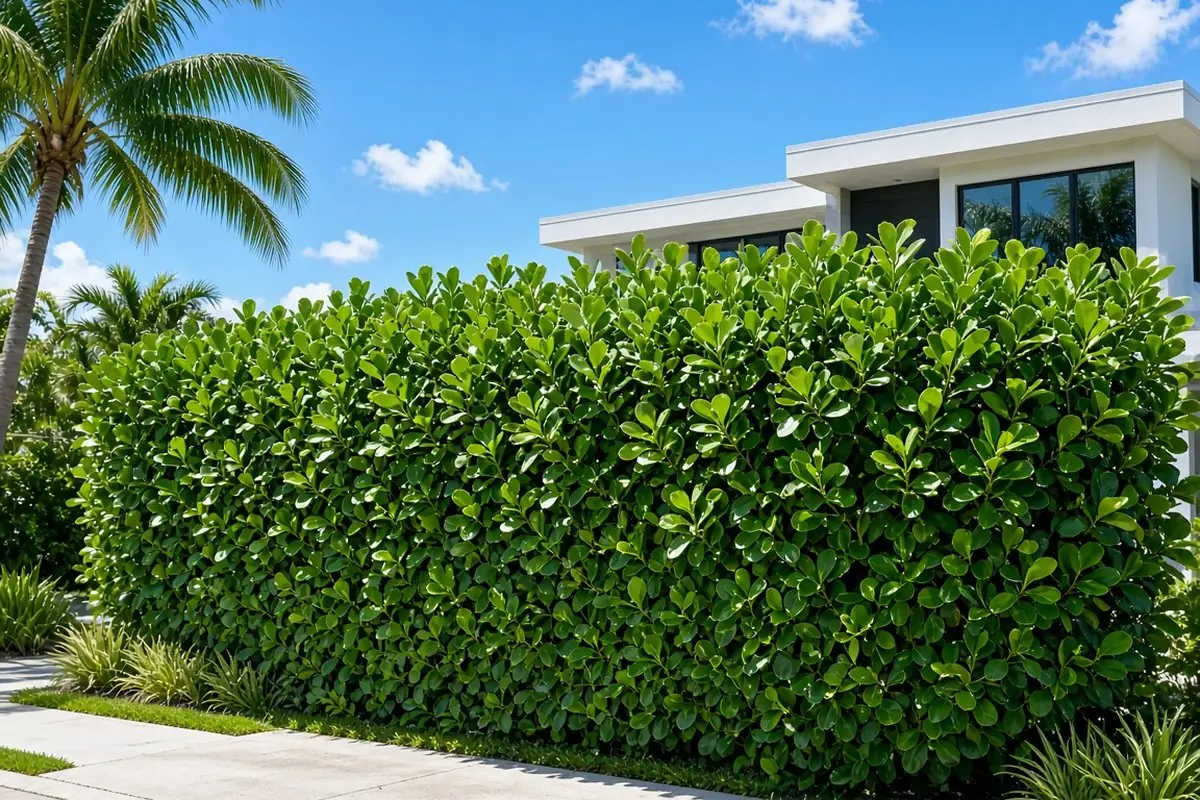
Clusia hedges for South Florida privacy are not a simple substitute for any green plant against a fence line. The species is used locally because dense foliage can form a continuous screen, but spacing, bed width, irrigation during establishment, and trimming still decide whether that screen holds. For homeowners comparing plant options, the useful starting point is not a catalog photo, but a clear privacy run: length, height target, and what else sits beside the hedge.
Earthly Exteriors, based in Southwest Ranches, includes Clusia hedge sales, delivery, and planting among its landscaping services, alongside lawn care, pavers, and tree work. That mix matters because a hedge rarely succeeds as an isolated purchase. Bed preparation, mulch, neighboring hardscape, and later shaping all affect the finished line.
Service details are outlined on the Earthly Exteriors services brochure, with the broader company overview on the Earthly Exteriors homepage.
South Florida yards deal with heat, humidity, and long growing seasons. A privacy hedge has one primary outdoor job: reduce sight lines without looking thin six months later. Clusia is often selected for that job when a solid evergreen face is the goal.
Clusia Versus Generic Screening Starts With Foliage Density
Broad-leaf Clusia growth is commonly used to build a vertical green wall rather than a loose ornamental row. Compared with sparse accent plantings, a properly sized and spaced Clusia screen can look intentional sooner, especially when plant caliper and height at install match the privacy target.
It remains a living system. Plants set too tightly fight for water and light. Beds that are too narrow against a fence are harder to maintain and keep dry or compacted. A dedicated bed with room to thicken usually outperforms a squeezed strip of soil.
Homeowners sometimes treat any hedge plant as interchangeable. Species habit, leaf size, and response to shaping are not interchangeable. Choosing Clusia for density still requires a plan for how wide the finished face is allowed to become.
Site Planning Changes the Installation Conversation
Front-yard street privacy, a pool deck, and a side-yard neighbor line do not need the same height or length. Measuring the run in feet, then noting gates, utility boxes, air-conditioning equipment, and windows that need light or airflow, prevents a hedge from solving one problem while creating another.
Corner lots and driveway exits need clear sight lines. A tall screen in the wrong place can block views that matter for safety even when the finished look is attractive from the patio. Setback rules and HOA limits belong in the same planning pass as plant selection.
Soil and drainage deserve a look before delivery day. South Florida fill, compacted parkways, and low spots that hold water after storms can all change how a new hedge establishes. Grading and bed renovation are part of the landscaping menu for a reason.
Match the Hedge to the Property Question
A useful comparison asks what the property must block and what it must keep open. If the objective is a continuous living privacy face with local supply and install, Clusia through a landscaping crew is a direct match. If the objective is an immediate legal boundary or secured entry hardware, a fence may still be required, with Clusia used as the green screen in front of or beside it.
Many South Florida properties combine both: fence for boundary, Clusia for cover. The brochure also lists tropical and native plant selection, fresh mulch, decorative stone, and landscape renovations, which lets a hedge project sit inside a wider bed and hardscape plan rather than as a one-plant afterthought.
Asking for plant-only delivery without bed width, irrigation, or shaping support often produces a weaker screen than a scoped install. The plant is one component. The bed and maintenance plan are the others.
Installation and Aftercare Are Part of the Material
A clean Clusia install is less about guessing plant performance and more about basics done carefully: healthy plants kept protected until planting, holes sized for the root ball, straight alignment along the planned screen, initial watering, and mulch that does not smother stems.
- Confirm hedge length, target height, and bed width before plants are ordered.
- Plan irrigation for the establishment period, including dry stretches between storms.
- Coordinate any paver, driveway, or walkway work so new root zones are not compacted afterward.
- Fold hedge shaping into routine lawn care rather than waiting for an annual hard cut.
Earthly Exteriors lists lawn care that includes hedge shaping and garden-bed care, which pairs naturally with a new screen. Tree trimming and removal are on the same service menu when overhanging palms or shade trees would drop litter or heavy shade onto the hedge line.
Establishment watering should track actual conditions. Afternoon storms do not automatically replace a missed irrigation window during a dry stretch. Sparse early care is a common reason a dense species still looks uneven in year one.
Hardscape Timing Can Influence Hedge Success
Paver driveways, walkways, repairs, and clean edging appear alongside planting on the brochure. Installing hardscape and planting in the wrong order can mean redoing bed edges or driving equipment across a newly planted screen. Homeowners planning both a privacy hedge and an entrance refresh should sequence the work so soil, edges, and access routes support the plants that remain.
Estimates are listed as free. The company invites property discussions by phone at (786) 285-3191 or email at info@earthlyexteriors.com. Pricing depends on run length, plant size, site access, grading needs, and whether mulch or hardscape is included.
A clear scope makes that estimate more accurate: measured linear feet, preferred finished height, notes on irrigation, and any fence or driveway work already planned. Vague requests produce vague numbers.
Local crews familiar with South Florida growing conditions can also flag when a proposed screen conflicts with utility easements, irrigation heads, or existing tree roots. Catching those conflicts before delivery protects both the plants and the rest of the landscape budget.
After the hedge is in, a simple photo log of the line at install and at thirty days helps homeowners and the crew judge establishment honestly. Gaps that appear early are easier to correct than a sparse face left unaddressed for a full season.
A Practical Standard for Privacy Planting
Clusia hedges are a South Florida privacy tool with local installation support, not a universal substitute for every boundary problem. The strongest project plan measures the screen, protects sight lines, gives the bed enough width, and treats delivery, planting, watering, and later shaping as one continuous process.
For homeowners comparing options, start with the privacy run and height target, then decide whether Clusia supply and planting should be paired with mulch, lawn-care shaping, tree work, or paver updates on the same timeline. Clear scope up front makes the free estimate more useful and keeps the finished hedge aligned with how the property is actually used.